
Medico-legal
Improving quality, safety and professionalism in practice. Everything you need to help you with clinical and legal challenges.

Showing results for all content. No active filters.
Refine your results:
Use the following filters to narrow down your search results. Each filter option will update the search results when selected.

Surgeon suspended over surgical errors, missed diagnoses and inadequate patient care
A general surgeon’s registration was suspended for 6 months after multiple adverse events. The tribunal was particularly concerned about the doctor’s failure to take appropriate steps to reduce risk, to provide appropriate follow-up care, or to fulfil their open disclosure obligations.

Judge rules 15-year-old lacks sufficient maturity to decide on life-saving treatment
In a recent case considering children’s capacity to consent, the court found a 15-year-old lacked sufficient maturity to refuse life-saving treatment for leukaemia. Although she was intellectually capable of understanding the treatment, she was unable to overcome anger and frustration with her treating team to demonstrate she had capacity to weigh up the medical advice objectively.

Court rules on 17-year-old’s capacity to refuse lifesaving treatment
Although the court found a 17-year-old had capacity to make healthcare decisions, it concluded it was in the child’s best interest to order life-saving medical treatment even though the child refused it.
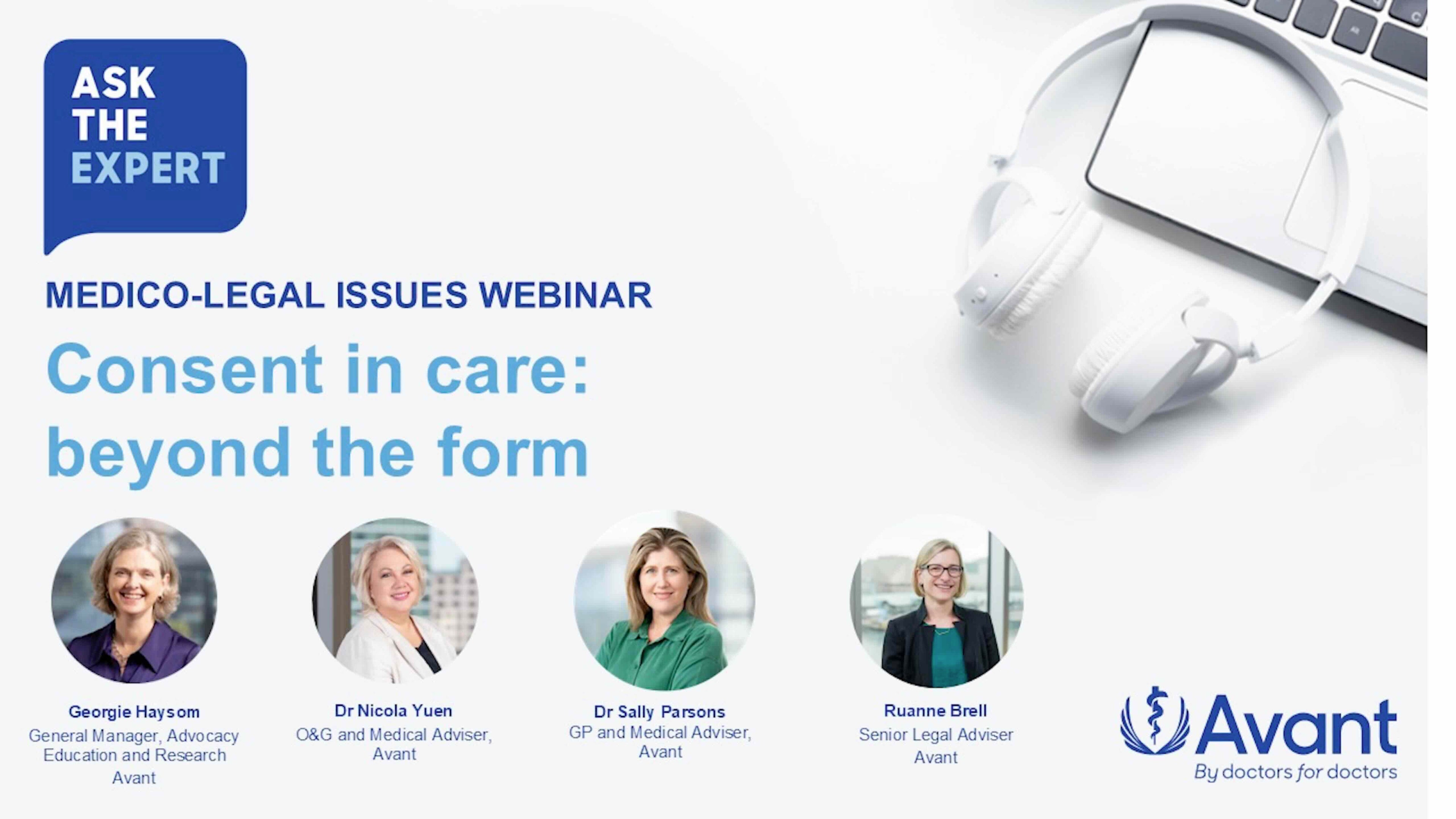
Consent in care: beyond the form - Measuring outcomes
This is a Measuring Outcomes activity (MO) to be completed after course RACGP #1684850/ACRRM #42991. In the webinar, we explored informed consent in clinical care, including capacity and mature minors, voluntariness, and managing patient expectations.
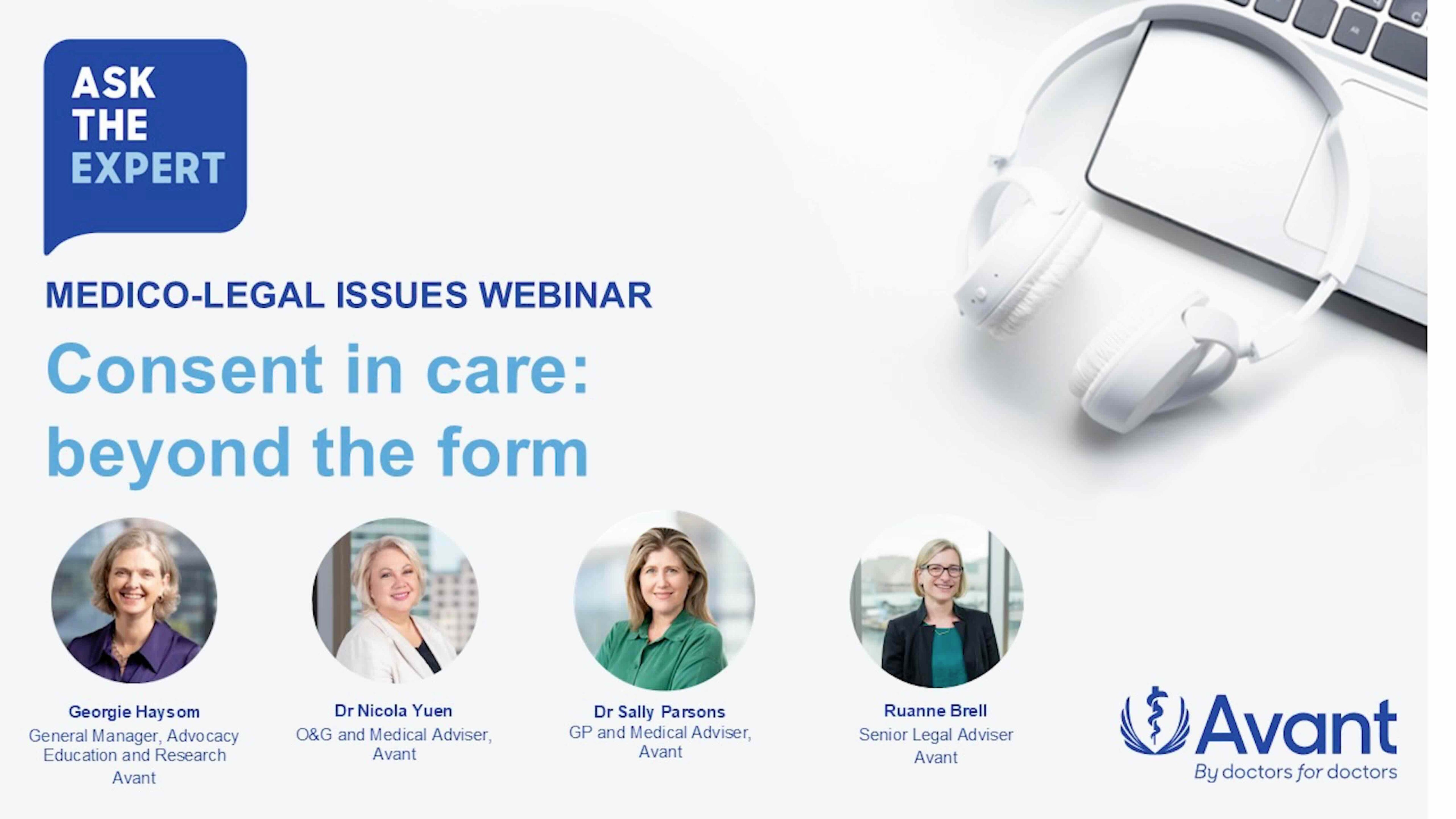
Consent in care: beyond the form
Informed patient consent is a fundamental professional, ethical, and legal obligation for all medical practitioners. Consent is important not just for procedures but for many aspects of clinical care. Using Avant data and case examples we discuss some of the key issues doctors face such as capacity, particularly for the mature minor. We also explored issues around what it means to give consent voluntarily and how the consent discussion is important when managing patient expectations.

Consent in everyday practice: reflections from a GP
Consent is embedded in everyday clinical care, often in conversations that become second nature. Dr Sally Parsons draws on three consultations and Avant’s claims insights to show why consent must be specific, voluntary, ongoing and clearly documented.

Failure to advise patient of treatment options results in $215,000 damages award
Informed consent requires doctors to give a patient all the information they may need to make an informed decision about their healthcare. In this case the court found that both surgical and conservative options should have been discussed.

Consent for non-procedural care
Consent is required not only for procedures, but also for other clinical activities such as prescribing medications, ordering investigations, and performing physical examinations. This course focuses on consent in non-procedural contexts, where the need for discussion may be overlooked or assumed. Using common clinical scenarios, it examines material risk disclosure, consent for treatment plans, and consent in sensitive examinations. The course supports doctors to integrate consent conversations seamlessly into routine care while meeting professional and legal standards.